
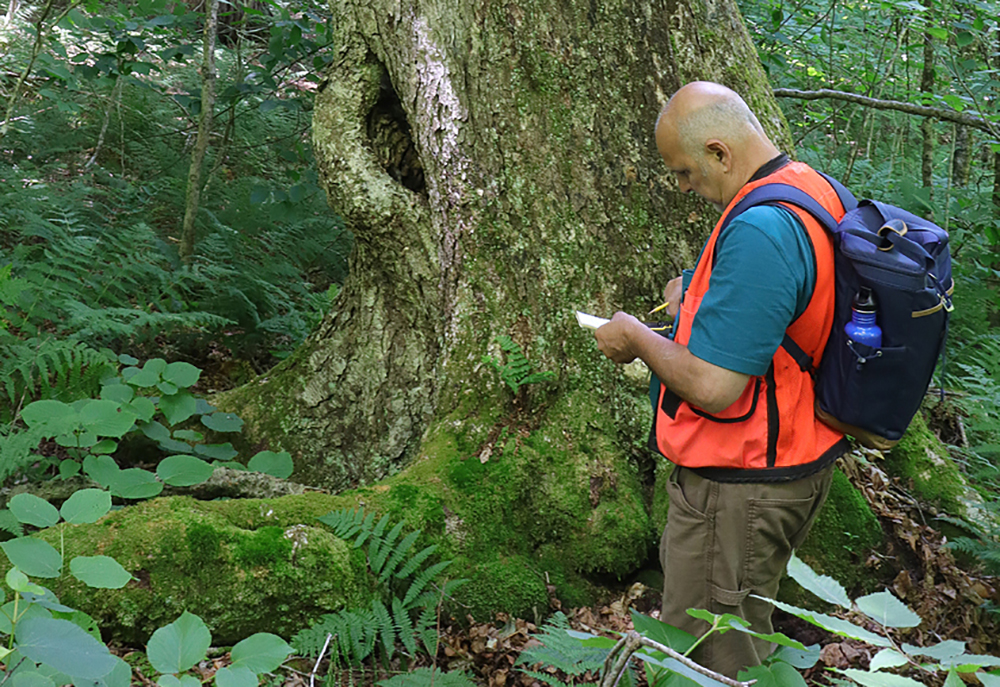
The 2025 Catskill Environmental Research and Monitoring (CERM) Conference from October 22-24 offered two field trip opportunities. Field trips allow researchers and managers to dialogue with each other across disciplines about potential collaborations.
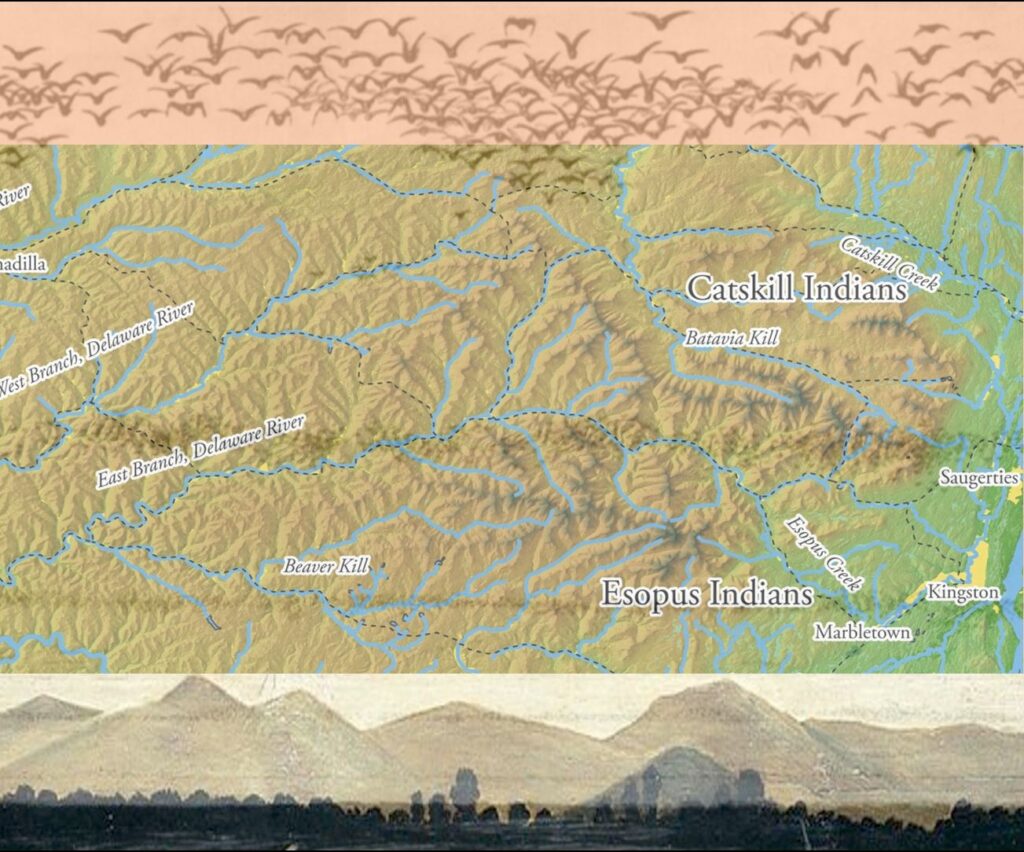
Field Trip 1 – In the Shelter of the Mountains: Native People and Catskill Mountain Ecosystems
Friday, October 24, 11:00 AM – 4:30 PM
For centuries, local Lenape People shaped Catskill Mountain ecosystems in the vicinity of the East Branch, Rondout, Esopus, and Schoharie valleys. This walk explored how they stewarded the landscape and identify flora and fauna of cultural importance for their communities, past and present. We also dived into how the Catskill Mountains allowed the Esopus Lenape and their neighbors to maintain their indigenous sovereignty in colonial days before they were finally driven to Ontario.
The field trip leader was Justin Wexler of Wild Hudson Valley. Justin is an independent scholar who has studied Hudson Valley Native culture, languages, and history for over 20 years. He regularly works with members of their displaced federally recognized communities, hosting tribe members on visits to their ancestral homeland and helping to connect the past with the present.
Location: The trip used the Rochester Hollow Trail located in the Shandaken Wild Forest .
Field Trip 2 – RECONSTRUCTING environmental HISTORIES
Friday, October 24, 11:00 AM – 4:00 PM
This field trip took us to a bog and first-growth forest where researchers cored the bog to demonstrate techniques that reveal forest and wetland histories that go back thousands of years. The site visited has a 13,100-year recorded environmental history. Bogs were ponds when the glaciers retreated from the Catskills. Cores are collected to identify the preserved vegetation in bogs and obtain radiocarbon dates. This helps researchers recreate environmental histories of forests and wetlands.
The trip leaders were Dr. Michael Kudish, Dr. Dorothy Peteet, and Dr. Nicole Davi. The researchers demonstrated coring methods used to develop environmental histories and discuss field research that links paleoclimate/ paleoecology histories to carbon storage and reconstruction of the history of climate and hydrologic variability in the Catskills.
Location: The bog site (Kudish, Bog #380) is near Margaretville, NY through first-growth forest at the north base of Balsam Lake Mountain.
